
Your source for workforce tracking insights, AI updates, and operational strategy that help you stay ahead and drive better results.
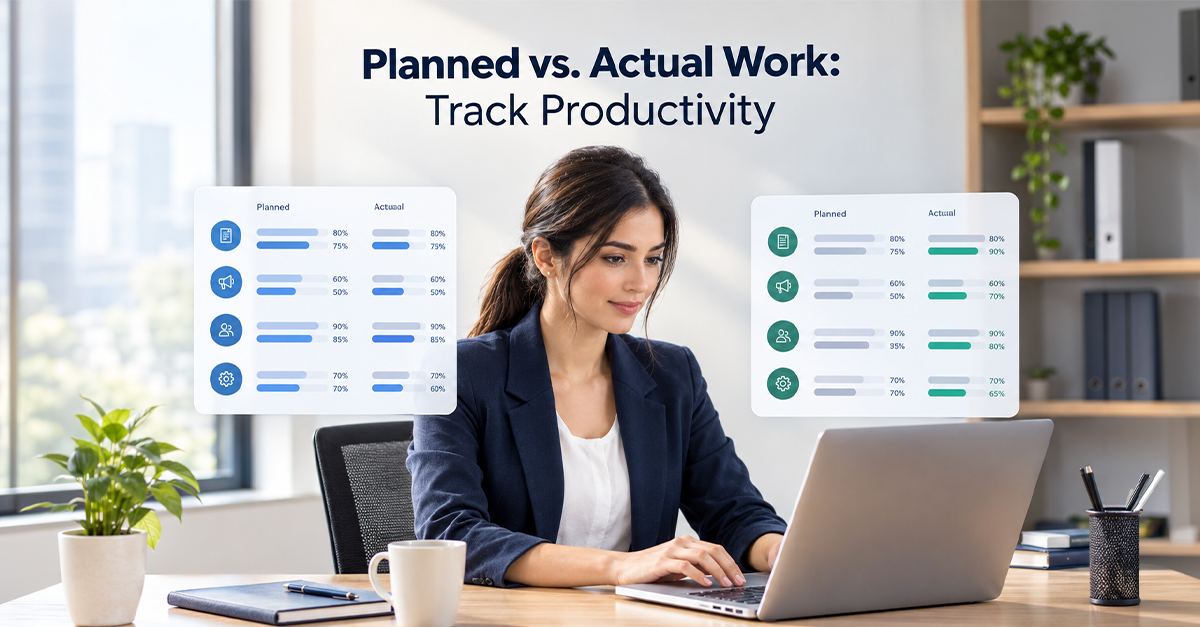
In today’s competitive business environment, completing tasks efficiently is essential for organizational success. However, assigning tasks and setting deadlines are only the first steps. Businesses also need to understand whether employees are completing planned activities, how much time their work requires, and what factors affect productivity.
Comparing planned tasks with actual work helps managers identify performance gaps, improve task management, and make better workforce decisions. With effective employee productivity tracking, organizations can move beyond measuring attendance and focus on meaningful work outcomes.
Planned work refers to the tasks, expected outcomes, and estimated time established before work begins. Actual work refers to the activities employees perform, the progress they make, and the time they spend completing those activities.
Comparing these two provides insight into task completion, time utilization, and planning accuracy. Microsoft Project, for example, supports comparisons between baseline work estimates and actual work to help identify schedule differences and tasks that may be falling behind.
Without a structured review process, managers may struggle to understand why deadlines are missed or productivity varies between teams.
Comparing planned and actual work helps organizations:
• Identify productivity gaps: Recognize tasks that remain incomplete or require more time than expected.
• Improve time management: Understand how employees allocate working hours across activities.
• Strengthen accountability: Give employees and managers clearer expectations and measurable progress indicators.
• Improve future planning: Use previous task records to establish more realistic workloads and deadlines.
• Support better decisions: Identify recurring delays, resource constraints, and opportunities to improve workflows.
Importantly, a difference between planned and actual work does not automatically indicate poor performance. Unexpected requests, unclear instructions, dependencies, and unrealistic estimates can also affect results.
Define tasks and expectations - Establish clear responsibilities, expected outcomes, and reasonable completion timelines before work begins.
Record actual work activity - Maintain records of the activities employees complete and the time spent on them. Accurate work logs provide a more reliable picture than relying entirely on memory or informal updates.
Compare planned and completed tasks - Review which activities were completed, which remain pending, and where actual work differed from expectations.
Investigate the reasons for differences - Discuss obstacles with employees instead of making assumptions. Determine whether the cause involves workload, interruptions, unclear priorities, or estimation errors.
Use the findings to improve performance - Adjust task allocation, clarify expectations, and refine future plans based on recurring patterns.
Khronous, powered by Labour Central, helps organizations connect employee attendance with daily work activity and productivity tracking. Managers can establish predefined tasks, review employee-logged activities and work durations, and compare recorded work against planned expectations at the end of the day. This process supports productivity scoring and provides a structured basis for evaluating work progress.
With its organizational hierarchy, Khronous also supports oversight across employees, supervisors, managers, and branches. Department leaderboards provide additional visibility into team performance.
By bringing attendance, work activity, and management review into one platform, Khronous helps businesses build stronger accountability, improve workforce visibility, and make more informed productivity decisions.
