
Your source for workforce tracking insights, AI updates, and operational strategy that help you stay ahead and drive better results.
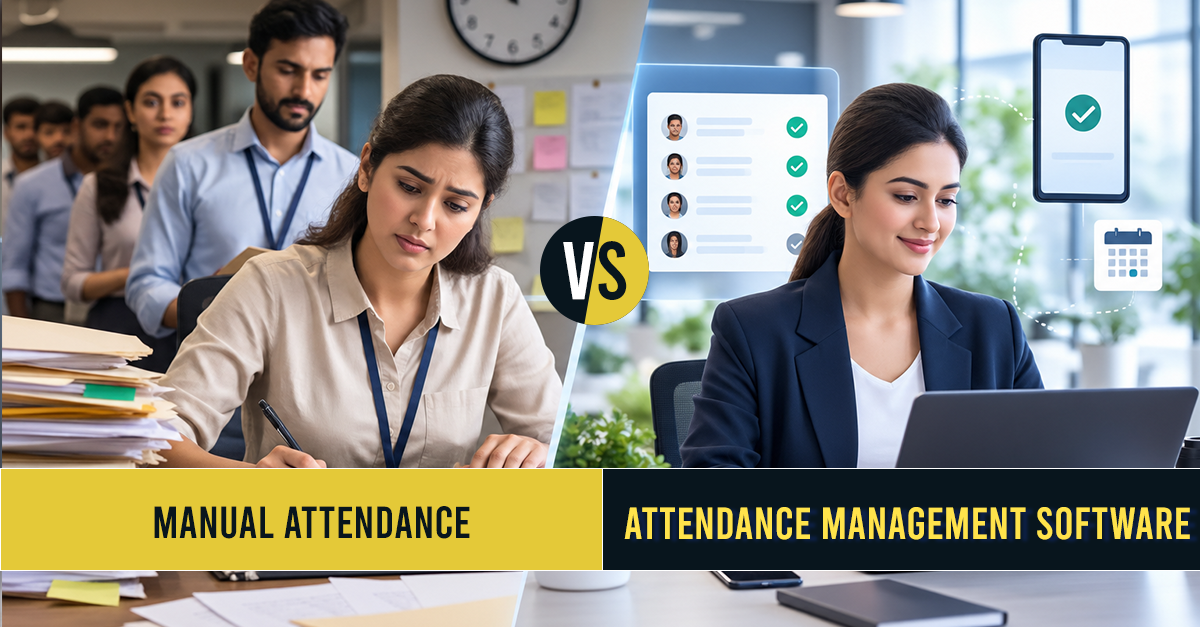
Attendance tracking is a fundamental part of workforce management. Businesses need reliable records of when employees start and finish work, but the way this information is collected can significantly affect administrative efficiency, accuracy, and workforce visibility. The two common approaches are a manual attendance system and attendance management software.
A manual attendance system typically relies on paper registers, Excel spreadsheets, punch cards, or manually maintained timesheets. Employees or supervisors record attendance, while HR or managers later verify the information and prepare reports.
Manual attendance can be inexpensive and straightforward for very small teams. However, as organizations grow, maintaining accurate records becomes more difficult. Missing entries, incorrect timings, duplicate records, and calculation mistakes can require additional verification and correction. Manual records can also make it harder to access attendance information quickly or maintain consistent records across multiple locations.
Attendance management software digitizes the process of recording and managing employee attendance. Depending on the platform, employees may record attendance through mobile applications, web-based systems, biometric devices, or other digital methods.
Modern attendance systems can provide centralized records, working-hour tracking, attendance reports, and automated workflows. They can also make information available to managers without requiring HR teams to manually consolidate multiple spreadsheets or registers.
The biggest difference is how much of the process depends on manual intervention.
With a manual attendance system, recording, checking, calculating, and reporting often require several steps. With attendance management software, these processes can be digitized, reducing repetitive administrative work and making attendance information easier to access.
Digital systems can also provide real-time visibility, which is particularly useful for organizations managing multiple teams, shifts, or branches. Managers can review attendance information centrally rather than collecting updates from different locations.
Another important difference is scalability. A spreadsheet may work for a small team, but maintaining consistent attendance records becomes increasingly challenging as employee numbers and locations increase. Digital workforce systems are designed to handle larger volumes of information and standardized processes.
The purpose of attendance management software is not simply to replace a paper register. It can create a more structured process around attendance, working hours, leave, reporting, and workforce planning.
Accurate attendance data can also support other business processes. Managers can use attendance information to understand workforce availability, identify attendance patterns, and plan resources more effectively.
Khronous takes attendance management beyond simply recording presence. Employees can punch in and punch out directly through the platform, creating a centralized record of their working hours.
Khronous also connects attendance with broader workforce management. Employees can apply for leave, log their work activities, and work against predefined tasks. Managers can then review attendance alongside task activity and productivity, giving them a broader understanding of workforce performance.
Its structured hierarchy connects employees, supervisors, managers, and directors, while productivity insights, department leaderboards, announcements, and centralized workforce information support day-to-day management.
For businesses moving from manual attendance tracking toward a more connected attendance management system, Khronous provides a way to combine attendance with productivity and workforce visibility in one platform.
